Client question
Which vehicle route is realistic for the first operating scenario?
Separate the near-term route from the future pilot
A commercial-vehicle brief was assessed across refurbished fuel, electric, and hybrid routes, with operating conditions and local service capacity treated as part of the decision.
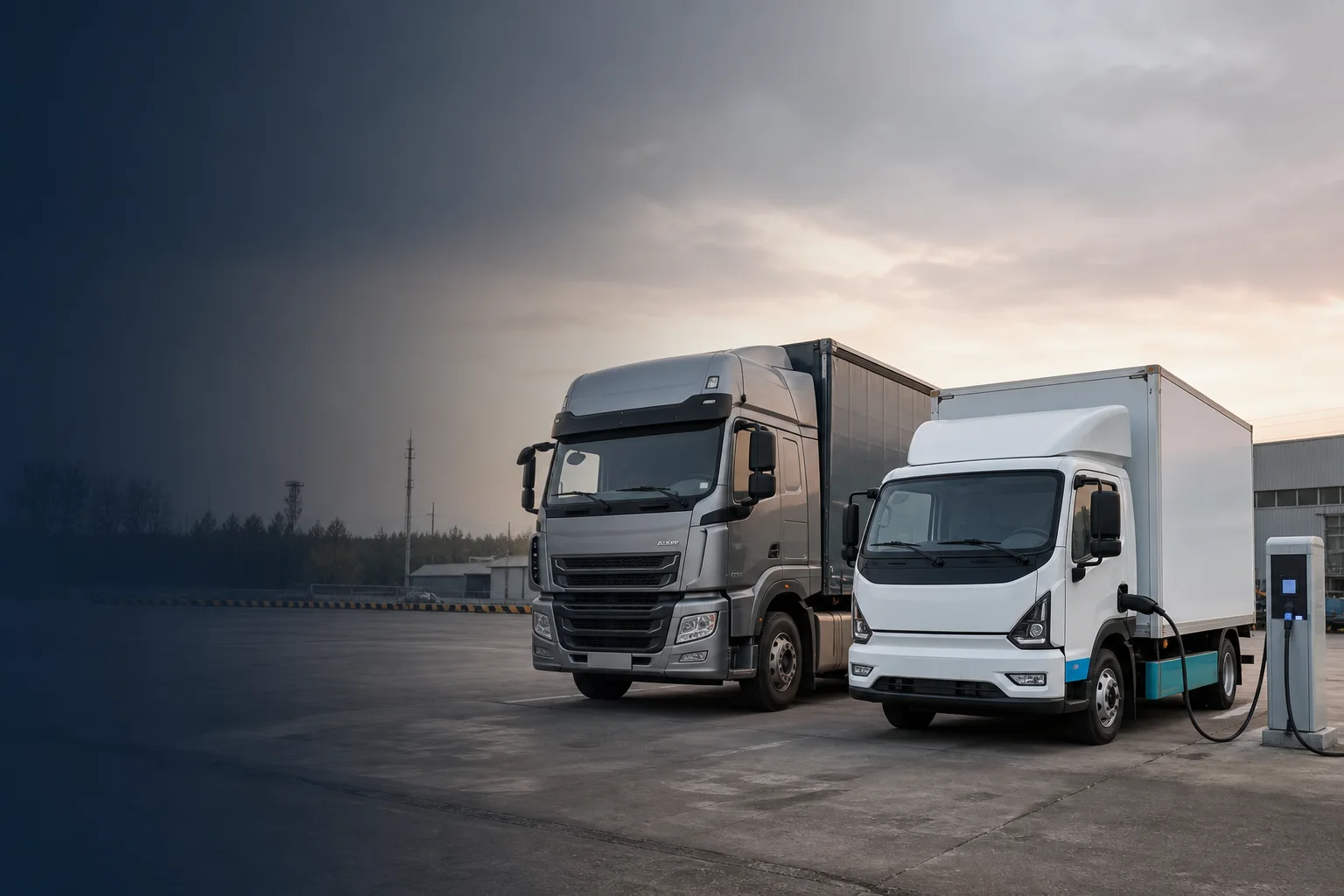
Which vehicle route is realistic for the first operating scenario?
Which vehicle route is realistic for the first operating scenario?
The electric route should be treated as a controlled pilot in a manageable operating environment rather than assumed to be a direct replacement for every use case.
Project Feasibility Assessment → vehicle and infrastructure checks → pilot definition
The public case is shown as a sequence of decisions and evidence gates—not as a promise of a supplier, quotation, or final project outcome.
Set the first credible product or operating scenario.
Make interfaces, dependencies, and responsibilities visible.
Surface technical, operating, compliance, and service conditions.
Turn the open questions into a bounded next-stage brief.
Illustrative public process. The exact sequence changes with the brief, available evidence, and approved scope.
The buyer needed to balance vehicle condition, components, maintenance, road conditions, charging access, compliance, and the practical demands of heavy-duty operations.
We compared use-case fit and refurbishment logic, separated near-term procurement from a possible electric pilot, and set evidence gates for vehicle, infrastructure, service, and compliance questions.
The electric route should be treated as a controlled pilot in a manageable operating environment rather than assumed to be a direct replacement for every use case.
Use the appropriate near-term vehicle route while preserving a staged path to test new-energy mobility where the operating conditions support it.
Desktop market and operating-feasibility analysis. It is not a vehicle inspection, import approval, financing decision, engineering validation, or operating guarantee.


Share the decision, the evidence you already have, and the risk you need to reduce. We will help identify the right next step.