Where
Industrial clusters narrow the search before supplier outreach begins.
Explore China's supply base by category, industrial cluster, and validation path — before you start collecting supplier names.
A practical map for overseas buyers who need to understand where capability sits, what evidence matters, and which decision should come next.
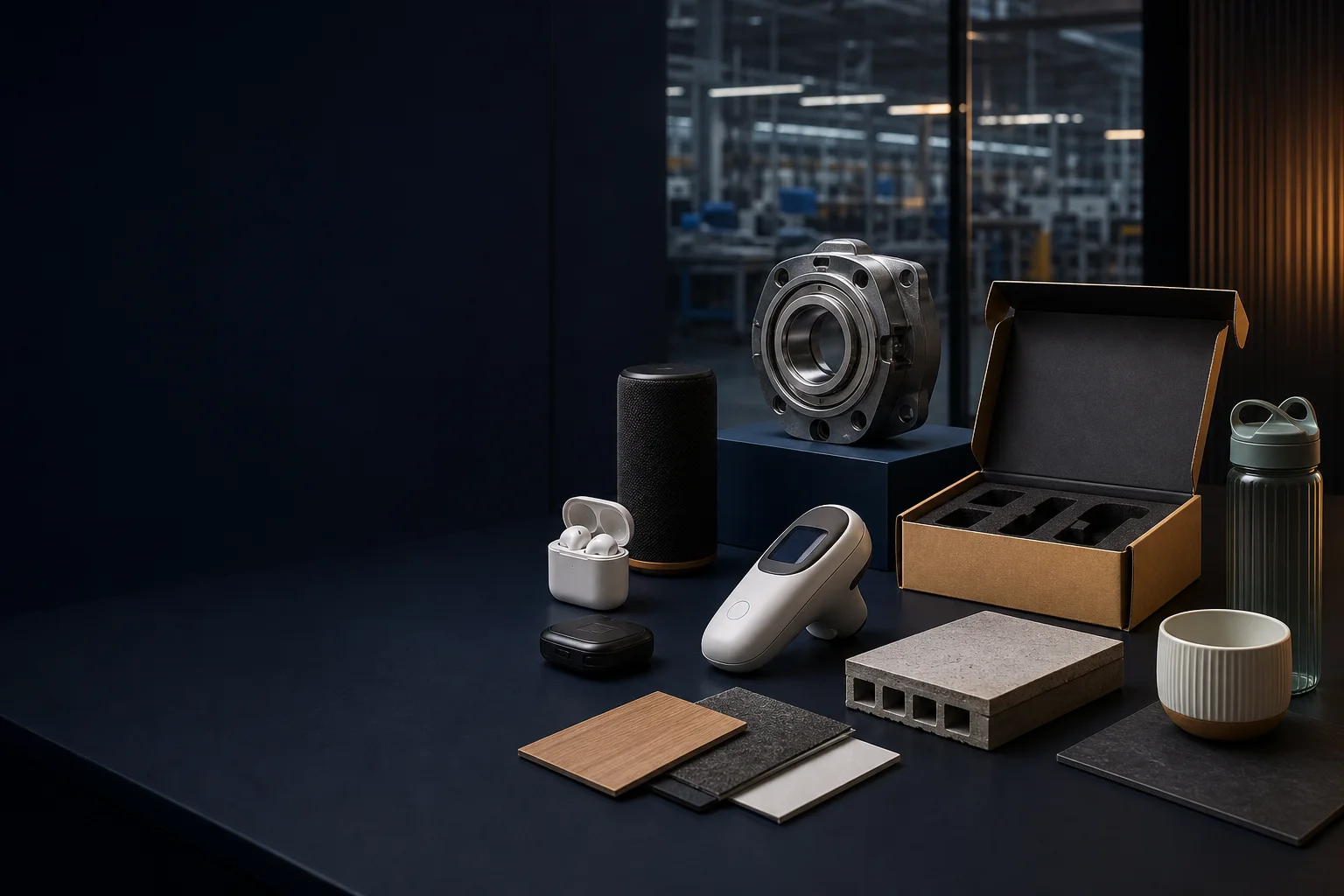
The same product can require a different city, supplier type, evidence path, and service sequence depending on its specification, target market, and commercial risk.
Industrial clusters narrow the search before supplier outreach begins.
The product question defines the capability and evidence that need to be checked.
A clear gate turns a broad China question into an accountable service decision.
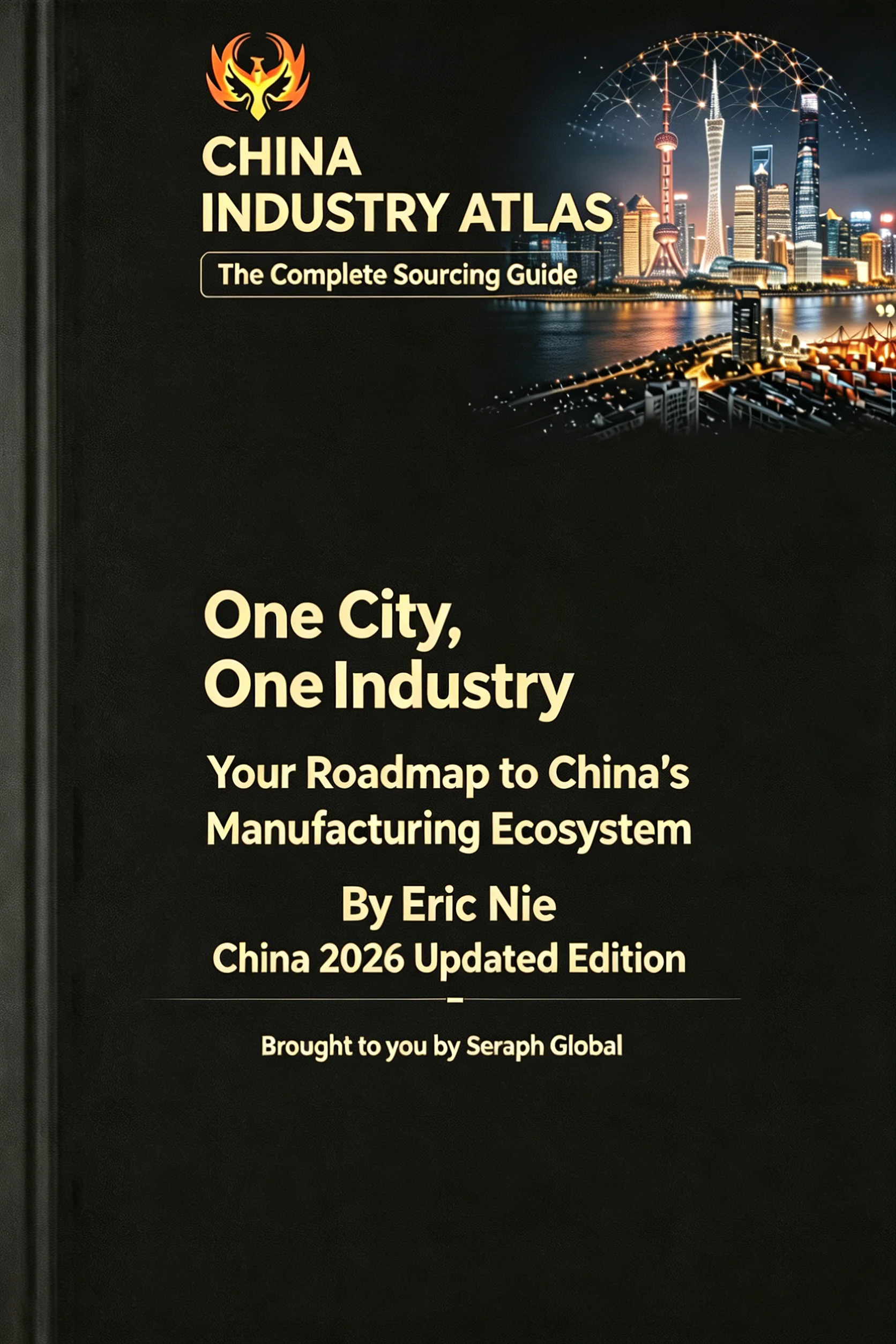
One City, One Industry — a field guide built from Eric's viral China supply-chain education and his work helping international buyers navigate the manufacturing ecosystem.
The Atlas moves from regional patterns and traditional hubs to next-generation manufacturing cities, sourcing practices, logistics essentials, and the questions buyers should ask before committing resources.
These categories are entry points for a sourcing conversation. Each one carries a different set of specification, compliance, supplier, and verification questions.

Home, lifestyle, accessories, private-label goods, and consumer products where specification and presentation matter.
Consumer electronics, hardware, OEM/ODM components, assemblies, robotics, and supporting accessories.

Machinery, tools, industrial systems, spare parts, automation, and project-based equipment sourcing.

Medical-related products, specialized manufacturing, certification-sensitive items, and products where evidence matters more than a catalogue claim.

Construction materials, interiors, infrastructure supplies, engineering-related products, and site-dependent decisions.

Packaging solutions, raw materials, semi-finished products, moulds, and upstream sourcing decisions.
Custom Projects is the route for non-standard requirements. It is intentionally separate from the product-category map because the work is defined by scope and execution responsibility, not by a product label.
Eric's Atlas explains why China's manufacturing ecosystem is clustered. The cluster narrows the search; it does not replace supplier-level evidence or project-specific validation.
Shenzhen · Guangzhou · Dongguan · Foshan · Zhongshan · Zhuhai
Electronics, consumer technology, furniture, lighting, toys, advanced manufacturing
Useful when the brief needs component density, fast iteration, export experience, or a broad manufacturing ecosystem.
Shanghai · Suzhou · Wuxi · Ningbo · Hangzhou · Yiwu
Automotive, machinery, textiles, semiconductors, new energy, e-commerce, small commodities
Useful when manufacturing depth, logistics, precision, and a strong industrial support network matter together.
Beijing · Tianjin · Qingdao · Dalian · Shandong
Home appliances, heavy machinery, petrochemicals, textiles, aerospace, biotech
Useful when the project involves heavy industry, engineering depth, northern logistics, or institutional capability.
Quanzhou · Xiamen · Ningde
Sports goods, footwear, ceramics, semiconductors, batteries, new energy
Useful when the brief combines consumer-brand manufacturing with new-energy or advanced-component questions.
Hefei · Wuhan · Xi'an · Chongqing
Semiconductors, new energy vehicles, aerospace, photovoltaics, advanced equipment
Useful when the product belongs to a strategic or high-technology cluster and the city decision is part of the feasibility question.
The supply base becomes useful when it changes the order in which you spend time, money, and attention.
Turn a product image, idea, or broad category into requirements, target market, evidence gaps, and a decision to make.
Use the category and regional cluster as a starting point, then screen the right supplier type instead of collecting generic leads.
Check identity, capability, samples, documentation, factory conditions, and the assumptions that can change the decision.
When the project is accepted, coordinate communication, visits, logistics interfaces, quality issues, claims, and repeat-order follow-up as agreed.

A flooring and adhesive brief was separated into two technical decisions, giving the buyer a clearer route to continue China exploration without more unstructured sampling.
Read the decision logic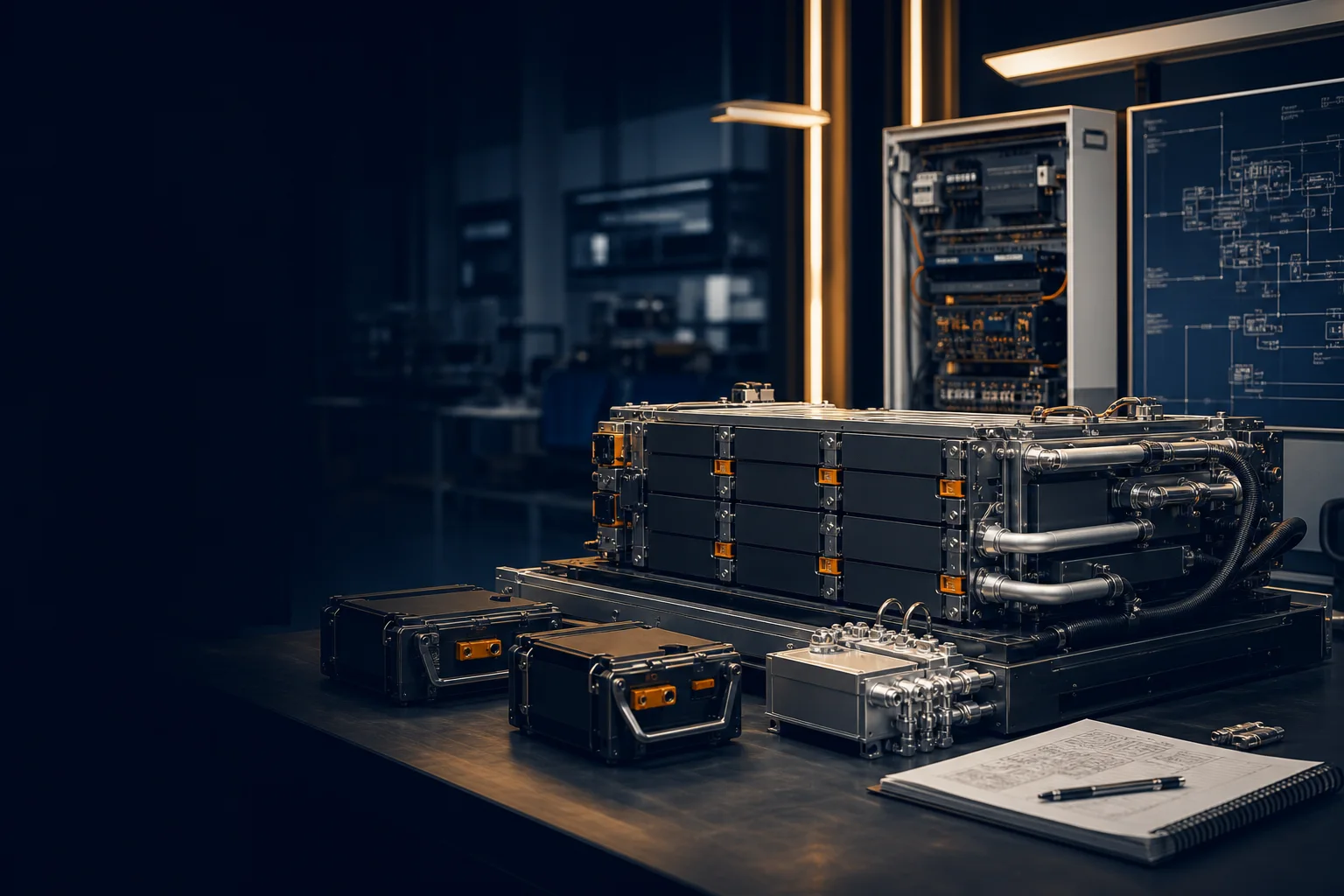
An emerging energy-storage concept was decomposed into technology, material, thermal, control, and engineering links so the buyer could judge whether China was the right development base.
Read the decision logic
A high-end creative mechanical watch concept was reviewed against China’s precision-manufacturing ecosystem before any confidential design details were exposed to the market.
Read the decision logicThe Atlas and this page help you ask better China questions. They do not promise a particular supplier, price, production slot, certification, or outcome.
Share the product, target market, intended quantity, evidence you already have, and the decision you need to make. We will point you to the right next step.