Client question
Which supplier and development conversations should happen in person?
Visit different supply-chain layers for different decisions
A branded merchandise and product-development brief was divided into launch merchandise and higher-customization work so the China visit could test the right capabilities.
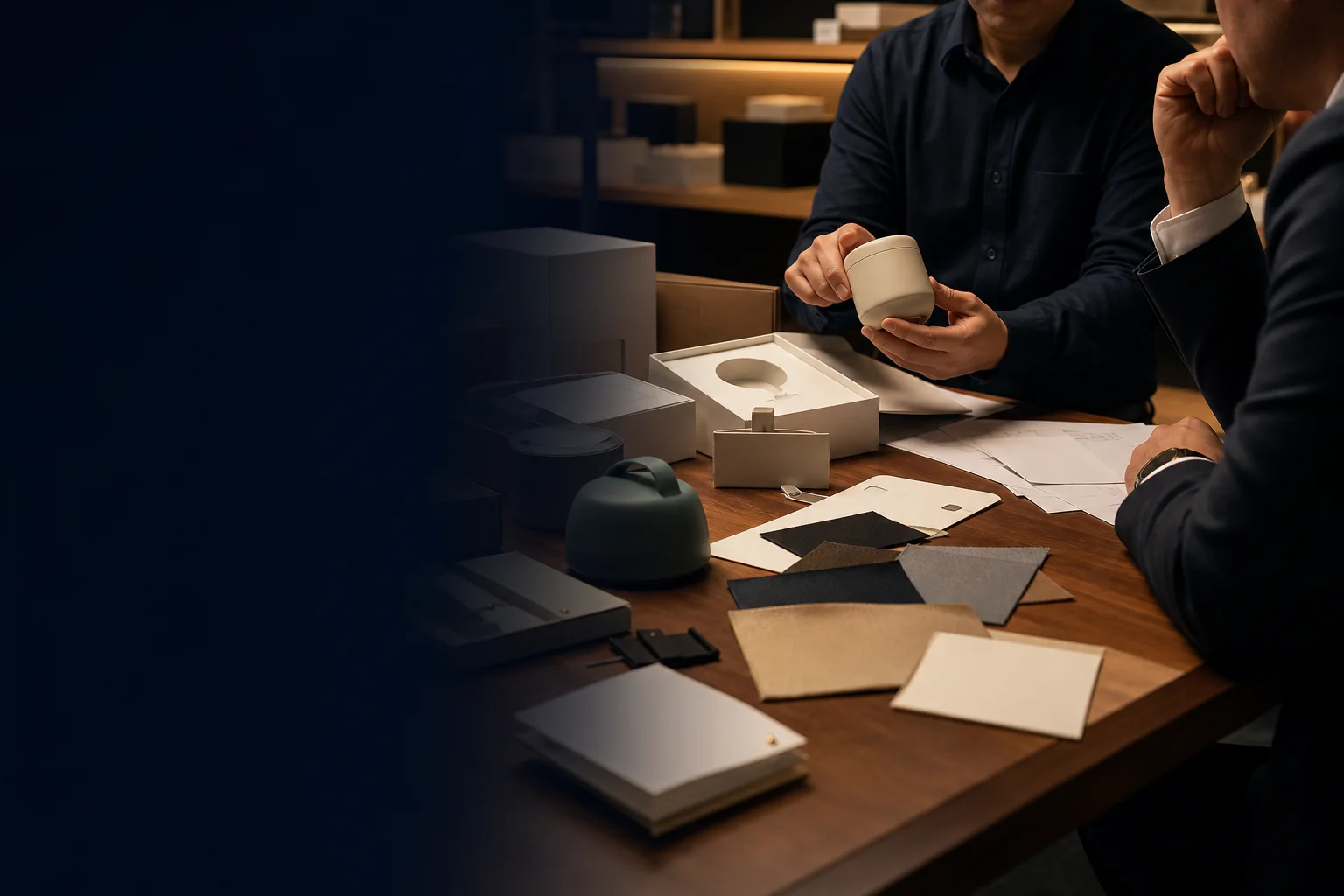
Which supplier and development conversations should happen in person?
Which supplier and development conversations should happen in person?
The itinerary should protect the brand and clarify responsibilities before revealing detailed creative or product information.
Business Visit Planning → protected meeting brief → sample or supplier-screening gate
The public case is shown as a sequence of decisions and evidence gates—not as a promise of a supplier, quotation, or final project outcome.
Define what the buyer must learn or compare onsite.
Arrange meetings and observations around those decisions.
Keep timing, demonstrations, and live-site access explicitly conditional.
Convert the visit into comparable notes and follow-up priorities.
Illustrative public process. The exact sequence changes with the brief, available evidence, and approved scope.
The buyer needed to explore several product families, but brand, IP, quality, customization, and production questions did not belong to one generic supplier route.
We separated the commercial and development workstreams, mapped suitable clusters and partner types, prepared visit questions, and kept the follow-up route open until the meetings produced evidence.
The itinerary should protect the brand and clarify responsibilities before revealing detailed creative or product information.
Use the visit to decide which product routes deserve a protected brief, sample, or formal supplier conversation next.
The public case does not disclose the brand, IP, product theme, suppliers, MOQ, production status, quotations, or contract terms. Access depends on third-party confirmation.
Share the decision, the evidence you already have, and the risk you need to reduce. We will help identify the right next step.